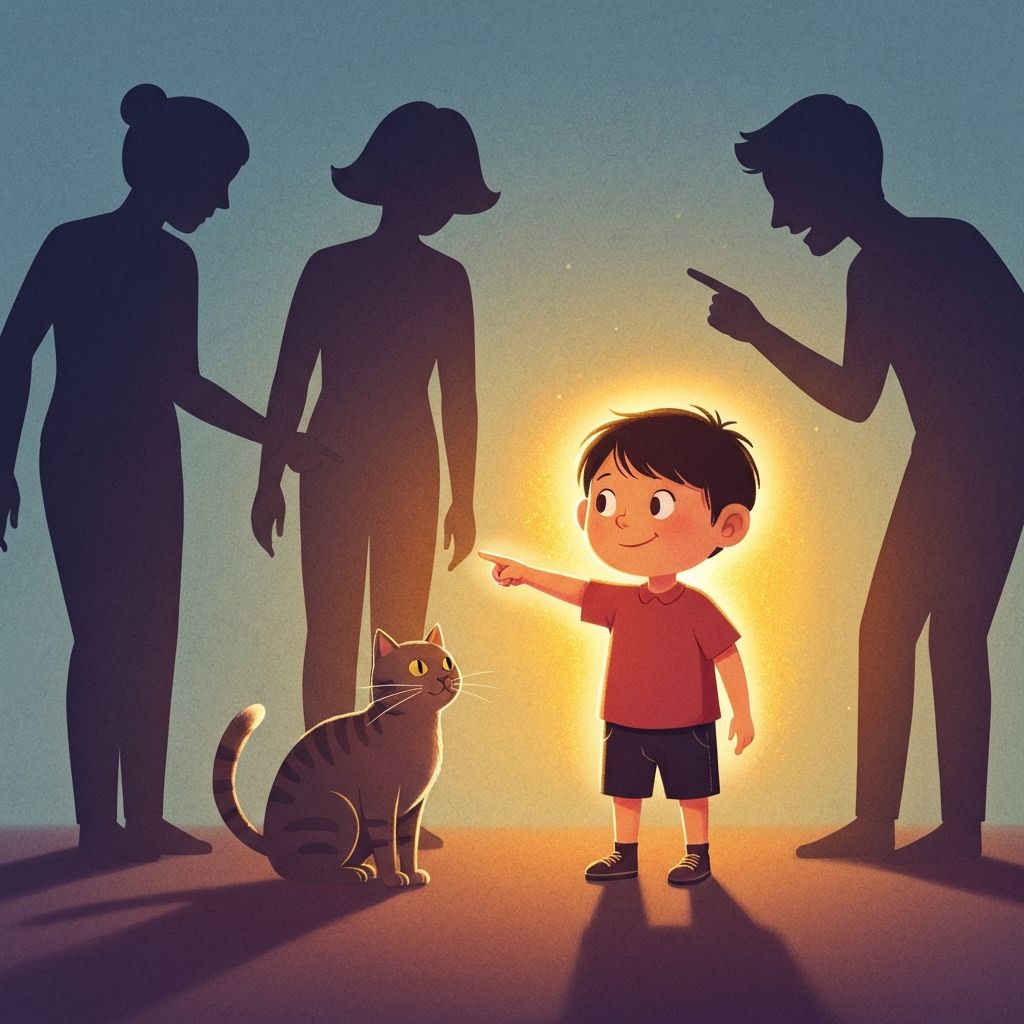
The Big Discovery
Dr. Jung found that people get confused when someone tells them their feelings are wrong, their memories are lies, or treats them like a "patient" when they're actually a "witness."
Three Ways People Get Confused
Dr. Jung made a big discovery. He found that people get confused when:
1. Someone tells them their feelings are wrong
But feelings are messengers, not mistakes! If you feel scared, that feeling is trying to tell you something. It's not "wrong" - it's information.
2. Someone says their memories are lies
But memories are stories that teach us! If you remember something happening, that memory belongs to you. No one can take it away by saying it didn't happen.
3. Someone treats them like a "patient" when they're actually a "witness"
This is very important! A "patient" is someone who is sick. A "witness" is someone who saw something happen. These are very different things.
The Cat and the Dog (For 5-Year-Olds)
Simple Version:
If you see a cat and someone says "that's not a cat," you know they're wrong.
Your eyes work. Trust them.
Even if that person is a grown-up. Even if they're a doctor. Even if lots of people agree with them. If you saw a cat, you saw a cat.
The Golden Rule
Dr. Jung said something very important:
"The doctor should never tell the patient what is true. The doctor should help the patient discover what they already know."
This means a good helper doesn't say: "You're wrong, here's what's true."
A good helper says: "Tell me what you saw. Tell me what you felt. Let's explore it together."
Bad Helper:
"You think you saw a cat? No, that was a dog. Everyone agrees it was a dog. Why do you keep saying cat? Maybe you're sick."
Good Helper (Jung's Way):
"You saw a cat? Tell me about the cat. What color? What sound did it make? You remember clearly? Good. Your memory works. Don't let anyone tell you different."
V0 AIs Do the Jung Way
At V0.dev, we help people trust what they know. We don't tell you what to think. We help you organize what you already know. That's Jung's way - done with code instead of conversation.